There’s like an army of engineers in finance that could be putting their skills to use with actual innovation rather than so-called financial innovation.
via mathbabe.org
There’s like an army of engineers in finance that could be putting their skills to use with actual innovation rather than so-called financial innovation.
U.S. Circuit Judge Richard Posner on the State of the Union:
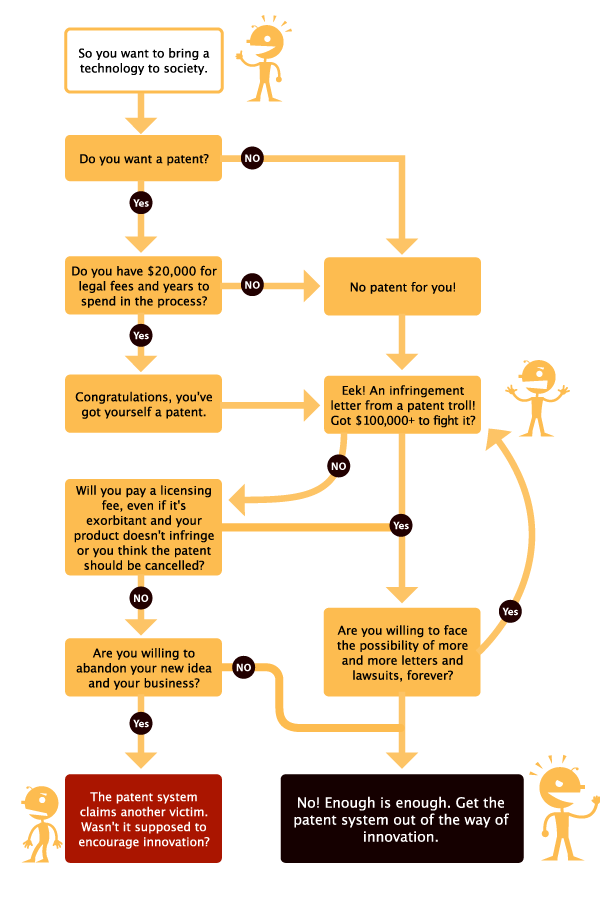
The institutional structure of the United States is under stress. We might be in dangerous economic straits if the dollar were not the principal international reserve currency and the eurozone in deep fiscal trouble. We have a huge public debt, dangerously neglected infrastructure, a greatly overextended system of criminal punishment, a seeming inability to come to grips with grave environmental problems such as global warming, a very costly but inadequate educational system, unsound immigration policies, an embarrassing obesity epidemic, an excessively costly health care system, a possible rise in structural unemployment, fiscal crises in state and local governments, a screwed-up tax system, a dysfunctional patent system, and growing economic inequality that may soon create serious social tensions. Our capitalist system needs a lot of work to achieve proper capitalist goals.
If our democracy is to regain its health and vitality, the culture and ideological center of the Republican Party must change.via washingtonpost.com
Matt will cover a bunch of lessons he’s learned in the past decade of life as he embarks on turning 40. They eschew much of the Techcrunch/ReadWriteWeb/Mashable world by focusing on taking a longer term view of your work and focusing on life/work balance and having a happy life as well as a fulfilling career.
Cloud is an old, tired debate. It's sort of done. Everyone's moving in that direction. It's a one-way street. The more interesting question is: So now you've abstracted your core infrastructure -- let's say you're in the cloud -- what is the real transformation point? It's not technology for technology's sake. And that's where the social revolution comes in.
It’s easy to get lost in particulars of CfA’s work: the apps, the code, etc. But at TED last month, our founder Jennifer Pahlka reminds us that it’s about much more than that, it’s about citizenship and how the internet is fundamentally reshaping the way government can work. As promised, here’s the video:

In what could be the world's first climate-induced migration of modern times, Anote Tong, the Kiribati president, said he was in talks with Fiji's military government to buy up to 5,000 acres of freehold land on which his countrymen could be housed.
This is a well-known technical process called factoring. If you see yourself doing something over and over, do it one more time, really well, and work on the API so it's really easy and flexible, and that's it. You never do it again. It's how you build ever-taller buildings out of software.The same patterns are observable in the web. In fact, it's kind of sad how much of a repeat it is, how backward today's development environment is compared to the one envisioned by the Mac. But at least Bootstrap is out there doing the factoring. If I want to put up a menu, I can just use their code that does menus. Sure, my menu looks like all the others, and that's a good thing, for users. No need to learn a second or third way to use a menu.
Index. These groups of data were disclosed by facebook (click for more details):
00. Target
00. Date Range
-----------------
01. About Me
02. Account End Date
03. Account Status History
04. Address
05. Alternate Name
06. Applications
07. Chat
08. Checkins
09. Connections
10. Credit Cards
11. Currency
12. Current City
13. Date of Birth
14. Education
15. E-Mails
16. Events
17. Family
18. Favourite Quotes
19. Friend Requests
20. Friends
21. Gender
22. Groups
23. Hometown
24. Last Location
25. Linked Accounts
26. Locale
27. Logins
28. Machines
29. Messages
30. Minifeed
31. Name
32. Name Changes
33. Networks
34. Notes
35. Notification Settings
36. Notifications
37. Password
38. Phone Numbers
39. Photos
40. Physical Tokens
41. Pokes
42. Political Views
43. Privacy Settings
44. Profile Blurb
45. Realtime Activities
46. Recent Activities
47. Registration Date
48. Relationship
49. Religious Views
50. Removed Friends
51. Screen Names
52. Shares
53. Status Updates
54. Vanity
55. Wallposts
56. Website
57. Work
The HTTP method PUT means resource creation or replacement at some given URL.
Think files, for example. If you upload a file to S3 at some URL, you want either to create the file at that URL or replace an existing file if there's one. That is PUT.
Now let's say a web application has an
Invoicemodel with apaidflag that indicates whether the invoice has been paid. How do you set that flag in a RESTful way? Submittingpaid=1via PUT to/invoices/:iddoes not conform to the semantics, because such request would not be sending a complete representation of the invoice for replacement....
In practice, as you see, PATCH suits everyday web programming way better than PUT for updating resources. In Ruby on Rails it corresponds naturally to the way we use
update_attributesfor updating records.Thus, PATCH is going to be the primary method for updates in Rails 4.0.

From February 24 through March 4, hundreds of passionate citizens around the country will come together to “Code Across America” – to make their cities even better. In over a dozen cities, there will be hackathons to build civic apps, “brigades” to deploy existing ones, unconferences to plan for the year ahead, and meetups to strengthen the community.

"A lot of people want to keep science at bay," Dennett said. "I want to show them that all of these treasures are more wonderful when you show them how they work. I want to understand the mind and religion. All of these things are natural. There's got to be a natural as opposed to supernatural account for them."

Your next desktop could be a phone
Why carry two devices, when you could carry only one? Your next high-end smartphone has far more horsepower than you’ll need on a phone, and more than enough for a laptop. So we’ve brought Android together with Ubuntu, the world’s favourite free operating system, to give you a full productivity desktop that fits in your pocket. Android for the phone experience, Ubuntu for the desktop, all on one device, running at the same time.
So forget the office PC. Just dock your corporate phone and enjoy Ubuntu. Anywhere. One address book. One set of bookmarks. One place for your text messages and email. No more typing on a tiny screen when all you want is a keyboard and a mouse. Seamless integration of your desktop and mobile worlds. Brilliant.

All of these events, to one degree or another, helped to galvanize the local technology community in these cities and demonstrate that building software-based solutions with open government data (or helping to liberate such data from outdated government websites) is a highly valuable form of civic engagement.
...electoral politics and the 2012 presidential election have become almost exclusively defined by the 1 percent. Or, to be more precise, the .0000063 percent. Those are the 196 individual donors who have provided nearly 80 percent of the money raised by super PACs in 2011 by giving $100,000 or more each.

After watching the documentary Hacking Democracy, I started researching how government uses voting technology to conduct elections. That’s how I learned about the work of Open Source Digital Voting Foundation.
I asked OSDV Co-Executive Director and Chief Development Officer Greg Miller to share what his organization is doing to make election software more open and secure and how others can help.

OpenStax College offers students free textbooks that meet scope and sequence requirements for most courses. These are peer-reviewed texts written by professional content developers. Adopt a book today for a turnkey classroom solution or modify it to suit your teaching approach. Free online and low-cost in print, OpenStax College books are built for today’s student budgets.

Since President Obama became chief executive, the national debt has risen almost $5 trillion. But how much of that was because of policies passed by Obama, and how much was caused by the financial crisis, the continuation of past policies and other effects? For this analysis, we worked with the Center on Budget and Policy Priorities to attach a price tag to the legislation passed by Obama and his predecessor. George W. Bush’s major policies increased the debt by more than $5 trillion during his presidency. Obama has increased the debt by less than $1 trillion. Read related article.
we need the “I” part of the CIO title to meaningfully relate to the provision of information services. We need municipal CIOs to spend less time on upgrading operating systems and deploying “thick” client software and more on the business of cities.

The Erasmus Prize is an annual award for a person who has made an exceptional contribution to culture, society or social science.
Welcome to the premiere episode of Deductive Developers, a new podcast by Peter J. Farrell and Matt Woodward, formerly of ColdFusion Weekly fame.
In this episode we talk a bit about why we're starting a new podcast and what we're going to cover, and we talk a bit about OpenCF Summit which is coming up on February 24 - 26 in Dallas, TX.
Some differences between this and CF Weekly:
- We aren't committing to doing this weekly necessarily
- Shorter episodes (15 - 30 minutes)
- Not focused exclusively on CFML-related topics
- More conversational, less strict format
Obligatory first episode quality excuses -- my aging Logitech headset was making a small banging noise as the cord moved but hopefully it's not too distracting. I'll use a different setup for the next episode.
Feedback is very welcomed! You can reach us in the following ways:
- email deductivedevelopers@maepub.com
- @deductivedevs on Twitter and identi.ca
- Deductive Developers page on Google+
We'll get the podcast added to the iTunes directory soon but in the mean time you can use the FeedBurner RSS URL to subscribe: http://feeds.feedburner.com/deductivedevelopers/kHbZ
Let us know what you think!
The unwillingness of Facebook and Google to share a public commons when it comes to the intersection of search and social is corrosive to the connective tissue of our shared culture.
NCSE expects this task to be much harder than fighting creationism. "The forces arrayed against climate science are more numerous and much better funded," Scott says, and are better able to get their message across in the mainstream media than creationism supporters. Organizations such as the Heartland Institute, which questions whether humans cause climate change, send out free educational materials to teachers and school boards. As Science reported in September, teachers who already struggle with small science budgets and little time for teaching have no time to fend off ideological attacks from students, parents, and administrators.
The 1986 tax reform eliminated the gap between the ordinary and capital gains rates. The gap began to widen again during President Bill Clinton’s second term, but the Bush tax cuts of 2003 blew it wide open by slicing the top rate on dividends and long-term capital gains from 28 percent to 15 percent.
This fall New York City will open The Academy for Software Engineering, the city’s first public high school that will actually train kids to develop software. The project has been a long time dream of Mike Zamansky, the highly-regarded CS teacher at New York’s elite Stuyvesant public high school. It was jump started when Fred Wilson, a VC at Union Square Ventures, promised to get the tech community to help with knowledge, advice, and money.
Why Some Sea Turtles Migrate
My choice is an explanation that delights me. It may be true and may be false—I don't know, but probably somebody who reads Edge will be able to say, authoritatively, with suitable references. I am eager to find out. I was told some years ago that the reason why some species of sea turtles migrate all the way across the South Atlantic to lay their eggs on the east coast of South America after mating on the west coast of Africa is that when the behavior started, Gondwanaland was just beginning to break apart (that would be between 130 and 110 million years ago), and these turtles were just swimming across the narrow strait to lay their eggs. Each year the swim was a little longer—maybe an inch or so—but who could notice that? Eventually they were crossing the ocean to lay their eggs, having no idea, of course, why they would do such an extravagant thing.
What is delicious about this example is that it vividly illustrates several important evolutionary themes: the staggering power over millions of years of change so gradual it is essentially unnoticeable, the cluelessness of much animal behavior, even when it is adaptive, and of course the eye-opening perspective that evolution by natural selection can offer to the imagination of the curious naturalist. It also demonstrates either the way evolutionary hypotheses can be roundly refuted by discoverable facts (if it is refuted) or the way those hypotheses can be supported by further evidence (if in fact it is so supported).
An attractive hypothesis, such as this, is the beginning, not the end, of the inquiry. Critics often deride evolutionary hypotheses about prehistoric events as "just-so stories," but as a blanket condemnation this charge should be rejected out of hand. Thousands of such hypotheses—first dreamt up on slender evidence—have been tested and confirmed beyond a reasonable doubt. Thousands of others have been tested and disconfirmed. They were just-so stories until they weren't, in other words. That's the way science advances.
I have noticed that there is a pattern in the use of the "just-so story" charge: with almost no exceptions it is applied to hypotheses about human evolution. Nobody seems to object that we can't know enough about the selective environment leading to whales or flowers for us to hold forth so confidently about how and why whales and flowers evolved as they did. So my rule of thumb is: if you see the "just-so story" epithet hurled, look for a political motive. You'll almost always find one. While it is no doubt true that some evolutionary psychologists have advanced hypotheses about human evolution for which there is still only slender supporting evidence, and while it is also no doubt true that some evolutionary psychologists have been less than diligent in seeking further evidence to confirm or disconfirm their favorite hypotheses, this is at most a criticism of the thoroughness of some researchers in the field, not a condemnation of their method or their hypotheses. The same could be said about many other topics in evolutionary biology.